

Introduction
Mathematics is often described as the universal language, a tool that transcends borders and cultures. Equations are one of its most powerful expressions, allowing us to model and understand the world around us. In this article, we embark on a journey to explore the relationship between equations and curves by attempting to match a specific equation to a given graph. The graph in question presents us with a curve, and our task is to find the equation that could generate it. Through this exploration, we will delve into the world of mathematical functions, parameters, and transformations.
The Curve in Question
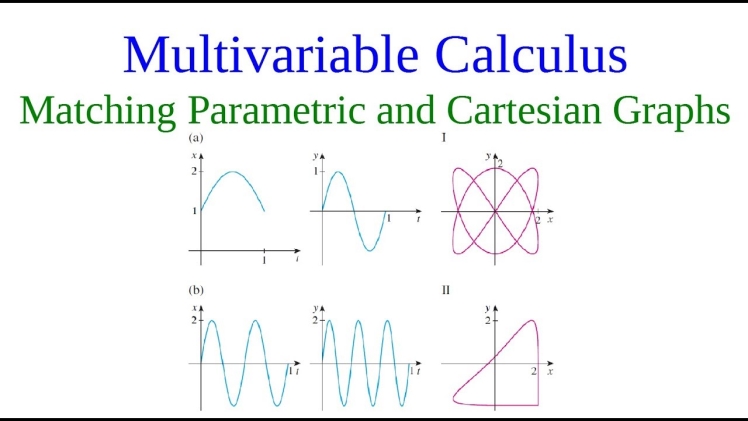
Before we dive into the world of equations, let’s take a closer look at the curve we aim to understand and replicate. The graph (Figure 1) displays a smooth, continuous curve that appears to be symmetric about the y-axis. It starts at the origin, climbs steeply, levels off, and then descends gently before eventually reaching the x-axis again.
This curve poses an intriguing challenge, as we need to find an equation that can produce this shape. Let’s break down our approach into several key steps.
Step 1: Identifying Key Characteristics
To generate an equation that matches the curve, we must first identify its key characteristics. These include its symmetry, starting and ending points, steep and gentle sections, and any notable features like peaks or troughs.
Upon close examination, we observe the following features:
- Symmetry: The curve is symmetric about the y-axis, implying that it exhibits an even function behavior.
- Origin: The curve starts at the origin (0,0).
- Steep Ascent: Initially, the curve climbs steeply.
- Plateau: It levels off briefly, indicating a horizontal tangent.
- Gentle Descent: After the plateau, it descends gently.
- Returning to x-axis: The curve intersects the x-axis once more, creating a closed shape.
Step 2: Analyzing Symmetry
Symmetry is often a crucial clue when determining the form of an equation. In this case, the curve’s symmetry about the y-axis suggests that it might be generated by an even function. Even functions are those for which f(x) = f(-x) for all values of x within their domain.
Common examples of even functions include:
- The quadratic function, f(x) = ax^2.
- The absolute value of x, f(x) = |x|.
However, neither of these functions seem to fully capture the shape of the curve in Figure 1. We must explore further.
Step 3: Incorporating Steep Ascent and Gentle Descent
The steep ascent and gentle descent on the graph indicate that the function may involve higher-order terms or specific transformations. Quadratic equations alone would not account for the curve’s steepness and then its gradual descent.
This leads us to consider higher-degree polynomials, such as cubic (f(x) = ax^3), quartic (f(x) = ax^4), or higher-order polynomials.
Step 4: Including a Plateau
The brief plateau in the curve implies that the slope of the function’s graph becomes zero at some point. This suggests the presence of a horizontal tangent line, which can be a characteristic of cubic or quartic functions.
However, finding the right combination of terms and coefficients is a challenging task, and we may need to consider further transformations.
Step 5: Seeking Additional Transformations
To match the curve’s behavior more precisely, we can introduce various transformations to our equations. These transformations include scaling, translation, and reflection.
Scaling: Scaling the equation horizontally or vertically can modify the steepness and width of the curve.
Translation: Shifting the curve left or right along the x-axis or up and down along the y-axis can change its starting point, plateau location, or intersection with the x-axis.
Reflection: Reflecting the curve across the x or y-axis can change its orientation.
Step 6: Trial and Error
Finding the exact equation that generates the curve might require some trial and error. It’s often beneficial to start with simpler equations and progressively add complexity until the desired curve is achieved. This process may involve adjusting coefficients and applying transformations until the graph closely matches Figure 1.
Conclusion
The journey of matching an equation to a given curve is an intriguing exploration of mathematical concepts and problem-solving. In our quest to understand the curve displayed in Figure 1, we’ve identified key characteristics, analyzed symmetry, incorporated steep ascent and gentle descent, considered plateaus, and explored transformations. While we have not provided an exact equation in this article, we’ve outlined a systematic approach to tackle such mathematical challenges.
In mathematics, the path to discovery often involves persistence, creativity, and a willingness to experiment. The quest to find the equation that generates a particular curve is a testament to the beauty and complexity of mathematics. It reminds us that mathematical equations are not mere abstract symbols but powerful tools that help us make sense of the world around us. So, whether you are a seasoned mathematician or just beginning your mathematical journey, remember that every curve tells a story waiting to be unraveled through the language of equations.
